
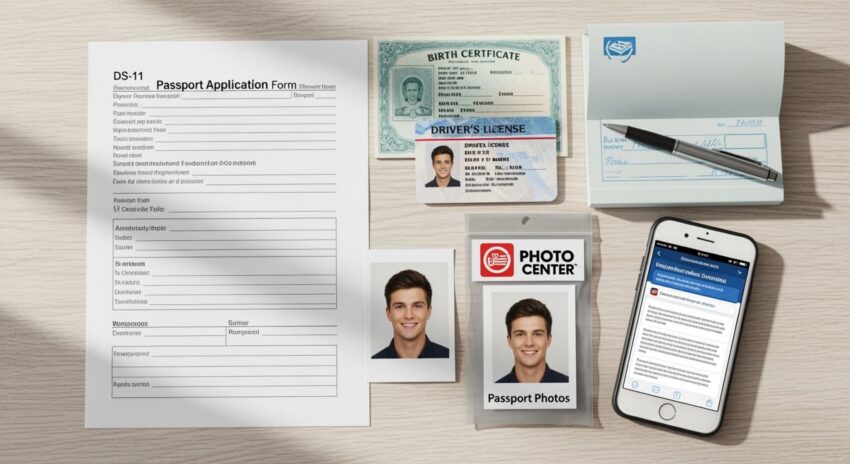
Getting a passport might feel like a daunting process, but trust me — it’s not as complicated as it sounds. Whether you’re planning an international trip, a study abroad program, or even just want to have your passport ready “just in case,” knowing exactly what’s required will save you a ton of time and frustration. In this guide, we’ll break everything down step by step: what documents you need, where to apply, how to prepare your photos, and where to get them done.
Why Getting a Passport Matters
A passport is much more than just a booklet with your photo and personal information — it is essentially your golden ticket to the world. Without it, international travel is simply impossible. Airlines, border control, and immigration authorities all require this official document to verify your identity and citizenship before allowing you to step onto foreign soil. Think of it like a universal key: without it, airports, hotels, and foreign embassies simply won’t recognize you. Whether you’re planning a vacation, attending a business conference abroad, or studying in another country, your passport is the single most important travel document you’ll ever own.
Beyond just travel, a passport serves as a globally accepted form of identification. Unlike local IDs, which may only be recognized in your country or region, a passport is valid worldwide. This makes it an extremely valuable document in situations where proof of identity is required, such as opening bank accounts in foreign countries, applying for international jobs, or even renting apartments abroad. Essentially, it acts as an internationally recognized identity card that confirms both who you are and where you come from, which is crucial in today’s interconnected world.
Some countries even require a passport for certain domestic procedures, such as applying for visas, registering for foreign programs, or handling international financial transactions. For instance, if you plan to participate in study abroad programs, professional exchanges, or international competitions, your passport becomes a mandatory document even if you haven’t left your home country yet. Additionally, having a passport ready in advance prevents unnecessary delays or last-minute stress when opportunities arise unexpectedly. It’s a preparation step that can save you time, money, and hassle later on.
Lastly, possessing a passport gives you a sense of freedom and flexibility that is hard to achieve without one. Imagine receiving an opportunity to travel abroad for a last-minute work assignment, a vacation deal, or even a family emergency — without a passport, all those doors are closed. With your passport ready and up to date, you have the liberty to explore, take advantage of sudden opportunities, or simply plan spontaneous trips whenever the mood strikes. It’s more than just a travel document; it’s a passport to independence, adventure, and global experiences.
Understand the Basic Passport Requirements
Applying for a passport isn’t just about filling out a form. You need to have all the right documents, photos, and information ready before you submit your application. Here’s a detailed list of everything you need to prepare:
- Proof of Citizenship – This is essential to prove that you are legally recognized as a citizen of your country. Acceptable documents include your birth certificate, naturalization certificate, or an existing valid passport. The authorities require this to verify that you have the right to obtain a passport. Make sure the document is an original or a certified copy because photocopies usually won’t be accepted.
- Identity Proof – You must provide official identification to confirm your identity. Government-issued photo IDs such as Aadhaar cards, driver’s licenses, or other national IDs are typically accepted. Your ID should match the details on your proof of citizenship to avoid delays or rejection of your application.
- Passport-sized Photos – Passport photos are not just any photograph; they must meet official guidelines to be accepted. The photo must be of high quality, with a plain white or light-colored background, showing a neutral expression, and clearly capturing your face. The size requirements vary by country, so make sure your photo adheres to the exact dimensions specified.
- Completed Application Form – The passport application form is the heart of your submission. You can usually fill it out online or offline, depending on the procedure in your country. Every detail must be accurate, including your name, date of birth, address, and parentage. Even minor errors can cause significant delays, so double-check everything before submitting.
- Application Fee – Obtaining a passport requires payment of a fee, which may vary depending on the type of passport (standard, expedited, or special services) and the processing time you choose. Fees can often be paid online or in person at the passport office, but you must retain the receipt as proof of payment.
- Additional Documents (if applicable) – Depending on your situation, extra documents may be required. For example, minors often need parental consent forms, people changing their names need legal name-change certificates, and lost passport applications require a police report or FIR. It’s essential to check these requirements carefully to avoid any setbacks.
- Proof of Residence – Some countries require proof of your current address. This can include utility bills, bank statements, or official government correspondence. The address proof ensures that the passport will be issued correctly and sent to the right location if it’s mailed.
Gather Proof of Citizenship
| Document Type | Who Needs It | Purpose | Requirements | Notes / Tips |
| Birth Certificate | Anyone born in the country issuing the passport | Verifies your place and date of birth | Must be an original or certified copy | Ensure it includes both parents’ names if required; old or damaged certificates may need replacement |
| Naturalization Certificate | Citizens who acquired nationality later in life | Confirms legal citizenship status | Must be original or certified copy | Include any supporting documentation like court orders if necessary |
| Existing Passport | Applicants renewing or replacing a passport | Serves as proof of prior citizenship | Must be valid or expired, but not damaged beyond recognition | Lost or stolen passports require a police report or affidavit |
| Citizenship Certificate | Children of citizens born abroad or under special circumstances | Confirms citizenship acquired through parents | Original certificate issued by government authority | Some countries require translation if not in official language |
| Government-Issued ID (as supplemental proof) | Applicants needing additional verification | Supports proof of identity and citizenship | Official ID such as Aadhaar card, national ID, or similar | Should match exactly with details on citizenship documents |
Prepare Valid Identification
Your identity proof is a critical part of the passport application process because it confirms who you are at the time of application. While proof of citizenship tells the authorities that you belong to a country, identity proof shows your current, legal identity. Governments require this to prevent fraud, impersonation, or mistakes in issuing official travel documents. Acceptable forms of identification vary by country but generally include government-issued ID cards, driver’s licenses, Aadhaar cards for Indian applicants, and sometimes PAN cards as supplementary proof. The key is that the document must be official, valid, and verifiable.
It’s essential that the details on your ID match exactly with your proof of citizenship. Even small discrepancies, such as a missing middle name, spelling errors, or differences in date formatting, can lead to delays or even rejection of your passport application. Passport authorities often scrutinize these details closely to ensure that every applicant’s identity is verified correctly. Double-checking your documents before submission can save weeks of waiting and reduce the risk of resubmission.
Another important consideration is the condition of your identification. Expired, damaged, or unclear documents may not be accepted. For example, a faded photo on a driving license or a partially torn ID card can raise questions about authenticity. If necessary, replace or renew your identification before applying for your passport. This extra step ensures that your application proceeds smoothly and avoids unnecessary hurdles during verification.
Finally, having multiple forms of identification can be advantageous, especially if one document does not fully satisfy all verification requirements. Some passport offices may request a secondary form of ID, particularly if your primary document is new, recently changed, or lacks certain details like a signature or full name. By preparing valid identification carefully and ensuring it aligns perfectly with your citizenship proof, you increase the chances of a seamless passport application experience.
Fill Out the Passport Application Form
Filling out the passport application form is one of the most important steps in the process. Accuracy, completeness, and attention to detail are critical to ensure your application is accepted without delays. Here’s a detailed list of considerations and steps to follow when filling out your form:
- Choose the Application Method – Decide whether to apply online or offline. Online applications are faster and allow you to schedule appointments directly, while offline applications require visiting a passport office or embassy to fill out a paper form. Choose the method that is most convenient for you and suitable for your circumstances.
- Provide Accurate Personal Information – Every field in the form must be filled out carefully, including your full name, date of birth, gender, place of birth, and current address. Ensure that your personal information matches exactly with your proof of citizenship and identity documents to avoid discrepancies.
- Include Parental and Family Details – Most applications require information about your parents, such as full names, birthplaces, and citizenship status. Some forms may also ask for details about siblings or spouse, depending on your country’s regulations. Providing complete and accurate family information helps authorities verify your background.
- Specify Passport Type and Service – Indicate whether you are applying for a standard passport, expedited processing, or a special category (such as diplomatic or official passports). This selection affects your processing time and fees, so choose carefully based on your needs.
- Provide Contact Information – Include your current phone number, email address, and emergency contact details if requested. Authorities may use this information to reach you for clarifications, updates, or appointment scheduling.
- Upload or Attach Supporting Documents – Attach or upload copies of your proof of citizenship, identity proof, photographs, and any additional documents required for your specific case. Make sure all attachments meet the official specifications in terms of size, quality, and format.
- Review and Verify All Entries – Carefully review the form for spelling errors, incorrect dates, and other inaccuracies. Even a small typo in your name, date of birth, or address can cause major delays and may require resubmitting the entire application.
- Sign the Application – If submitting a paper form, ensure that you sign in the designated areas. For online forms, use the digital signature option if available, following the instructions precisely. Unsigned forms are usually considered incomplete.
- Keep Copies for Your Records – Always make copies of the completed application form before submission. This serves as a reference in case you need to check information, provide updates, or track your application later.
Get Your Passport Photos Right
| Criteria | Requirement | Why It Matters | Tips for Compliance | Common Mistakes to Avoid |
| Size | Typically 2×2 inches or 35×45 mm depending on the country | Ensures the photo fits official documents correctly | Measure before submitting; check country-specific size | Using wrong dimensions or cropping incorrectly |
| Background | Plain white or light-colored background | Helps clearly identify your face without distractions | Stand 2–3 feet from background; avoid patterns | Colored, dark, or cluttered backgrounds |
| Expression | Neutral expression — no smiles, frowns, or raised eyebrows | Ensures biometric accuracy for facial recognition | Relax your face and look straight at the camera | Smiling, exaggerated expressions, or head tilts |
| Clothing | Avoid uniforms, overly bright colors, or flashy clothing | Prevents confusion with official identification rules | Wear simple, solid-colored attire | Wearing hats, logos, or distracting patterns |
| Accessories | No hats, sunglasses, or heavy jewelry | Ensures your face is fully visible for verification | Remove glasses, earrings, or other face-covering items | Wearing hats, glasses, or large jewelry |
| Hair & Face | Hair should not cover your face or eyes | Ensures clear visibility for identification | Tie back long hair, keep forehead visible | Bangs covering eyes or hair casting shadows |
| Quality | High-resolution, no blurriness, shadows, or reflections | Low-quality images can cause rejection | Use professional cameras or studios; proper lighting | Blurry images, shadows across face, overexposed areas |
| Lighting | Even, natural lighting without harsh shadows | Avoids facial distortions and ensures accurate color | Face a window or soft light source | Using overhead lights or direct sunlight causing shadows |
Where to Get Passport Photos
Getting your passport photo taken might seem like a small step, but it’s one of the most important parts of the application process. The photo must meet strict guidelines, and choosing the right place to get it done can save you from unnecessary delays or rejection. There are several options available, each with its own advantages, depending on your needs, budget, and convenience. Understanding these options will help you make an informed choice and ensure your application moves smoothly.
Professional photo studios are often the best choice for those seeking guaranteed acceptance. These studios are experienced in passport-specific requirements, including size, background, expression, and quality standards. A professional photographer can ensure that your photo meets all official specifications, reducing the risk of rejection. Additionally, many studios provide digital copies, which are especially useful if you are submitting an online application. This option is slightly more expensive but provides peace of mind that your photo is compliant.
Some passport offices offer in-house photo services, making it convenient to handle everything in one visit. You can complete your application and have your photo taken at the same location, which can save time and reduce the stress of visiting multiple places. While these services may be limited in terms of timing or availability, they are generally reliable and follow the exact guidelines set by the passport authorities. This option is ideal if you prefer to complete the entire application process in a single trip.
For those looking for convenience or lower-cost options, retail stores, kiosks, and online photo tools are viable alternatives. Many pharmacies, supermarkets, or convenience stores provide passport photo services at an affordable price, often with quick turnaround times. Online photo tools and mobile apps are another modern solution — you can upload a selfie, and the software formats it to meet passport standards. While convenient and fast, you must ensure that the final photo adheres strictly to the official guidelines. Choosing the right option depends on your priorities, whether that’s accuracy, speed, cost, or overall convenience.