
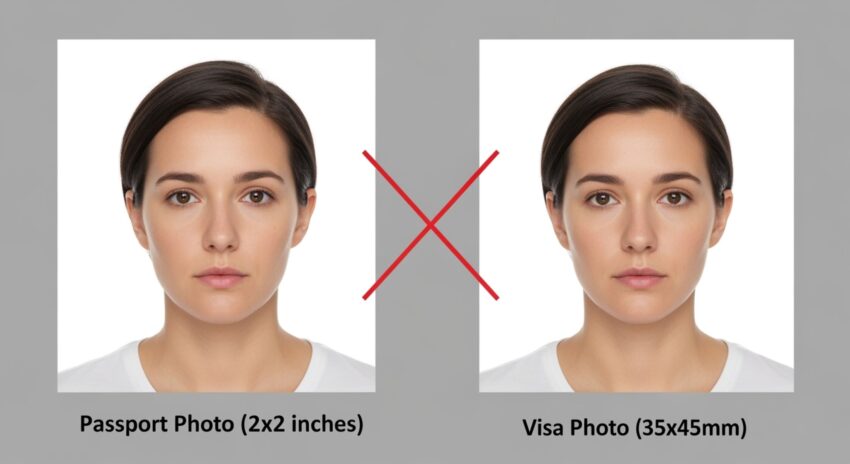
If you’re preparing to travel abroad, one of the first things you’ll need is a valid passport and, in many cases, a visa. While getting these documents ready, a common question arises: “Can I use the same photo for both my passport and visa?” The short answer is: sometimes yes, but not always. It depends on the country’s rules, the photo specifications, and the timing of your application. In this article, we’ll break down everything you need to know — from photo size requirements to submission tips — so you avoid costly mistakes and delays.
Understanding Passport vs. Visa Photos
Before you even think about reusing a photo for your passport and visa, it’s crucial to understand how these two types of photos differ. At first glance, they might seem identical — after all, both are small, head-and-shoulders shots of your face — but the rules governing them are quite distinct. A passport photo is primarily meant for identification within your travel document. It ensures that border officials, airlines, and other authorities can confirm your identity quickly and accurately. On the other hand, a visa photo is attached to your visa application and sometimes printed directly onto the visa itself. This photo serves the same identification purpose but must meet the specific standards of the destination country’s immigration system.
The regulations for these photos also differ significantly. Passport photos are controlled by the country issuing the passport, meaning size, background color, and facial expression are all determined by local authorities. Visa photos, however, follow the rules set by the destination country’s immigration office, which can vary widely from country to country. For example, some countries may require a light blue background for visa photos, while passport photos typically need a plain white or off-white background. This difference in regulation is one of the main reasons you can’t always reuse the same photo.
When it comes to size, passport and visa photos can be surprisingly different. In the U.S., passport photos are usually 2×2 inches, but in many other countries, the required dimensions vary. Visa photos may need to be 35x45mm, 40x50mm, or other sizes depending on the country. Beyond size, the number of photos required can also differ. While most passport applications only need one or two images, some visa applications may ask for multiple copies to process your application efficiently. This makes preparing separate photos often unavoidable.
Finally, digital submissions add another layer of complexity. Many countries now require passport photos to be submitted online in digital format when applying online, and e-visas almost always demand digital images that meet strict resolution and file size standards. A passport photo that exists only in printed form may not be acceptable for a visa application that requires a high-resolution JPEG upload. Understanding these distinctions — purpose, regulations, size, quantity, and digital requirements — is essential before deciding whether a single photo can serve both purposes, and it highlights why many travelers end up needing separate photos for their passport and visa.
When You Can Use the Same Photo
In many situations, it is possible to use the same photo for both your passport and visa, but only if certain conditions are fully met. Here’s a detailed breakdown of the factors that determine whether one photo can work for both applications:
- Matching Photo Dimensions
Your passport photo must be exactly the same size as the visa photo requirement. Different countries have different size standards, so this is crucial. For example, U.S. passport photos are 2×2 inches, which perfectly aligns with U.S. visa photo specifications. If your photo meets this size requirement, you are eligible to reuse it for your visa application. - Background Compliance
The background of your photo must match both the passport and visa rules. Most countries require a plain, light-colored background — often white or off-white — without any patterns or shadows. If your passport photo already adheres to these background standards, it can be used for the visa as well. - Face Visibility and Expression
Your face must be fully visible with no obstructions such as hair covering your eyes. The expression should be neutral with the mouth closed, and eyes directly facing the camera. If your passport photo already meets these facial visibility and expression standards, it may be reused. - Head Coverings and Accessories
Any head coverings are generally only allowed for religious reasons and must not obscure the face. Glasses are usually discouraged or need to meet specific rules (like no glare). If your passport photo respects these regulations, it can be accepted for visa purposes. - Recent and Valid Photos
Most countries require that photos be taken within the last six months to ensure your current appearance is accurately reflected. Even if your photo meets all other technical requirements, it will need to be retaken if it is older than six months. - Proper Lighting and Clarity
The photo must be well-lit, free of shadows, and of high quality. Blurry or poorly exposed photos are usually rejected for both passport and visa applications. If your passport photo is clear and well-lit, it increases the chances it will be accepted for a visa. - Digital vs. Printed Compatibility
Some visa applications, especially e-visas, require digital photos in specific file formats, sizes, and resolutions. If your passport photo is available digitally in the correct format, you can reuse it; if not, a new digital version may be necessary. - Adherence to Country-Specific Rules
Some countries have minor but strict differences in facial positioning, crop margins, or other technical standards. If your passport photo aligns perfectly with the destination country’s guidelines, reuse is possible. Otherwise, a new photo must be taken.
When You Cannot Use the Same Photo
| Reason | Passport Photo Example | Visa Photo Example | Issue | Result |
| Different Size Requirements | U.S. passport: 2×2 inches | Schengen visa: 35mm x 45mm | Sizes do not match the destination country’s specifications | A new photo must be taken to match visa size |
| Different Digital Specifications | Printed passport photo | E-visa upload requires 600×600 pixels, <1MB | Passport photo may not be in required digital format or resolution | Must create a new digital photo for e-visa submission |
| Different Background Colors | White or off-white for passport | China visa: light blue | Background color does not meet visa requirements | Photo must be retaken with correct background |
| Face and Expression Standards | Passport: neutral, eyes open, mouth closed | Some countries require stricter facial alignment or specific head positioning | Passport photo may not comply with visa-specific technical rules | New photo needed to meet visa facial guidelines |
| Photo Age / Recency | Passport photo older than 6 months | Visa requires recent photo (last 6 months) | Old photo may not reflect current appearance | A new photo is required for visa application |
Country-Specific Examples
When it comes to using the same photo for both passport and visa applications, the rules can vary significantly depending on the destination country. For example, in the United States, the passport and visa photo specifications are identical. Both require a 2×2 inch photo with a plain white background, a neutral facial expression, and full face visibility. This makes it straightforward for travelers: if your passport photo meets all U.S. requirements, it can generally be reused for a U.S. visa application without any issues.
In contrast, the Schengen Zone presents a completely different scenario. Schengen visa applications require photos that are 35x45mm, which often differs from the standard passport photo sizes in many countries. Additionally, minor technical differences such as head positioning, cropping, and facial proportions can cause a passport photo to be rejected for a Schengen visa. Therefore, travelers applying for Schengen visas almost always need a separate photo that fully complies with these specific requirements.
For India, the situation is somewhat conditional. If you’re applying for a traditional printed visa and your passport photo matches the required size and background, it might be accepted. However, for e-visas, digital specifications such as resolution, file format, and maximum size come into play. Even if your printed passport photo is compliant, you may need to scan it or retake it to meet the e-visa’s digital requirements. This is why reusing a passport photo for an Indian visa is sometimes possible, but not guaranteed.
China is stricter in its requirements. Visa photos must have a light blue background, which is different from the white or off-white backgrounds commonly used for passports in most countries. Similarly, Australia generally has similar specifications for passport and visa photos, making reuse often possible, but authorities still recommend double-checking the exact requirements before submission. These country-specific differences underscore why it’s crucial to carefully review visa photo guidelines before assuming your passport photo will suffice.
Tips for Avoiding Photo Rejection
Visa and passport photo rejections can be frustrating, costly, and even delay your travel plans. To make sure your application goes smoothly, follow these detailed tips:
- Check Official Guidelines Thoroughly
Always start by consulting your passport authority’s official website and the embassy or consulate of your destination country. Rules regarding photo size, background, head positioning, and expression can vary slightly, and only official sources provide the most accurate information. Ignoring these details is one of the fastest ways to get your photo rejected. - Use Professional Photo Services
While DIY photos might seem convenient, professional photo services understand the strict rules for both passport and visa photos. They ensure your photo meets the correct dimensions, background color, facial visibility, and expression requirements. Many services also provide both printed and digital versions, which can be essential for e-visa applications. - Avoid Reusing Old Photos
Immigration authorities often reject photos that are more than six months old because your appearance may have changed. Even if an old photo looks fine, it’s safer to take a fresh one to avoid unnecessary delays or complications in your application. - Have Both Digital and Printed Copies Ready
Digital submissions are becoming more common, especially for e-visas. Having both high-quality digital and printed versions ensures you can meet any requirement quickly. This is especially important if you are applying for multiple visas or countries simultaneously, as each might have slightly different submission standards. - Ensure Proper Lighting and Clarity
A well-lit photo with no shadows, glare, or blurriness is critical. Poor lighting can obscure facial features, leading to rejection. Professional photographers or photo centers usually have controlled lighting setups to prevent these issues. - Check Background Requirements Carefully
Some countries require specific background colors, such as light blue or off-white, instead of the standard white. Verify the destination’s guidelines to avoid background-related rejections. - Follow Facial Positioning Rules Exactly
Make sure your head is centered, your eyes are open, and your face occupies the correct portion of the frame. Different countries may have different cropping rules or margins that need to be strictly followed. - Avoid Accessories That Obstruct Your Face
Glasses, hats, or head coverings (unless for religious reasons) can cause rejections. Make sure your entire face is visible and complies with the destination country’s rules.
Photo Specification Comparison
| Country | Passport Photo Size | Visa Photo Size | Background Color | Digital Upload Required? |
| U.S. | 2×2 inches | 2×2 inches | White | Yes, for DS-160; JPEG format, max 240KB, recent photo (<6 months) |
| U.K. | 35x45mm | 35x45mm | Light gray or cream | Yes; JPEG or PNG, must meet facial positioning standards, recent photo |
| Schengen Area | Varies by country | 35x45mm | White or off-white | Sometimes; high-resolution digital uploads often required, strict cropping and face proportion rules |
| India | 2×2 inches | 2×2 inches (e-visa digital differs) | White | Yes for e-visas; digital image must meet size, resolution, and file format requirements |
| Australia | 35x45mm | 35x45mm | White | Yes; JPEG format, proper head positioning and clear visibility required |
| China | 33x48mm | 33x48mm | Light blue | Yes; digital upload mandatory for e-visas, must meet strict facial expression and background rules |
| Canada | 50x70mm | 50x70mm | White | Yes; JPEG or PNG, recent photo, head centered and fully visible |
| Japan | 35x45mm | 35x45mm | White or off-white | Yes; clear, recent photo, no shadows or glare |
| New Zealand | 35x45mm | 35x45mm | White | Yes; digital upload required for online visa applications, strict head position rules |
| Germany | 35x45mm | 35x45mm | Light gray or white | Sometimes; digital upload preferred, must meet Schengen photo guidelines |
Digital Photo Considerations
As international travel becomes increasingly digital, many countries now require passport and visa photos to be submitted electronically. This shift aims to streamline application processes, reduce manual handling, and improve the accuracy of identification checks. Because of this trend, travelers can no longer rely solely on printed passport photos; understanding digital photo requirements is becoming essential for a smooth application experience.
For passport applications, online submissions typically require a digital photo in a specific format, usually JPEG or PNG. These files must meet strict size limits to ensure they are compatible with government processing systems. Exceeding the allowed file size or using the wrong format can result in application delays or rejections. Additionally, many countries impose pixel dimension guidelines to ensure the photo is clear and detailed enough for identity verification.
For visa applications, especially e-visas, the rules are often even stricter. Countries generally require high-resolution images that meet exact pixel specifications, commonly around 600×600 pixels, and file sizes under 1MB. Some destinations also mandate precise cropping, head positioning, and facial alignment. A printed passport photo scanned without meeting these digital requirements may not be accepted, forcing applicants to retake or digitally adjust their image.
Digital photo considerations also extend to file quality and clarity. Blurry images, poor lighting, or shadows can lead to automatic rejection, even if all other criteria are met. Therefore, it is highly recommended to use professional services or verified digital tools that ensure your photo meets both passport and visa digital standards. By preparing a compliant digital photo in advance, you can save time, avoid repeated submissions, and reduce stress during the application process.